Written for Dr. Ashish Sharma (PT) · medical review pending
Spine
Lower back pain
Most lower back pain is not caused by serious damage. It usually improves with the right mix of movement, strength and confidence. The aim is to settle the pain, then build a back that copes with your real day — sitting, lifting, travelling and sport.
Common symptoms
- Ache or stiffness across the lower back
- Pain on sitting long, bending or lifting
- Morning stiffness that eases as you move
- Muscle spasm or a 'locked' feeling
Common causes
- Long sitting and low activity
- Sudden increase in lifting, gardening or training
- Weak hips and trunk muscles
- Stress and poor sleep, which raise pain sensitivity
See a doctor in person first if you have
- Loss of bladder or bowel control, or numbness around the groin
- Fever, unexplained weight loss or a history of cancer with new pain
- Pain after a major fall or accident
- Weakness in a leg or foot, or numbness that is spreading
Can this be helped online?
Very well suited to online care. Assessment of movement, posture and trigger activities works well on video, and the treatment is mainly guided exercise and habit change.
Your recovery roadmap
Every plan is personalised. This is how a typical programme progresses — tap each stage.
Stage 1 · Weeks 1–2
Settle
- Understand your pain and what is safe
- Gentle movement to reduce spasm
- A flare-up plan you can use alone
Starter exercises
General, gentle starting points. Stop any exercise that sharply increases your pain, and get a personal plan before progressing.
Pelvic tilts
Lie on your back, knees bent. Gently flatten then arch your lower back.
Glute bridge
Lie on your back, knees bent. Squeeze your buttocks and lift your hips, then lower slowly.
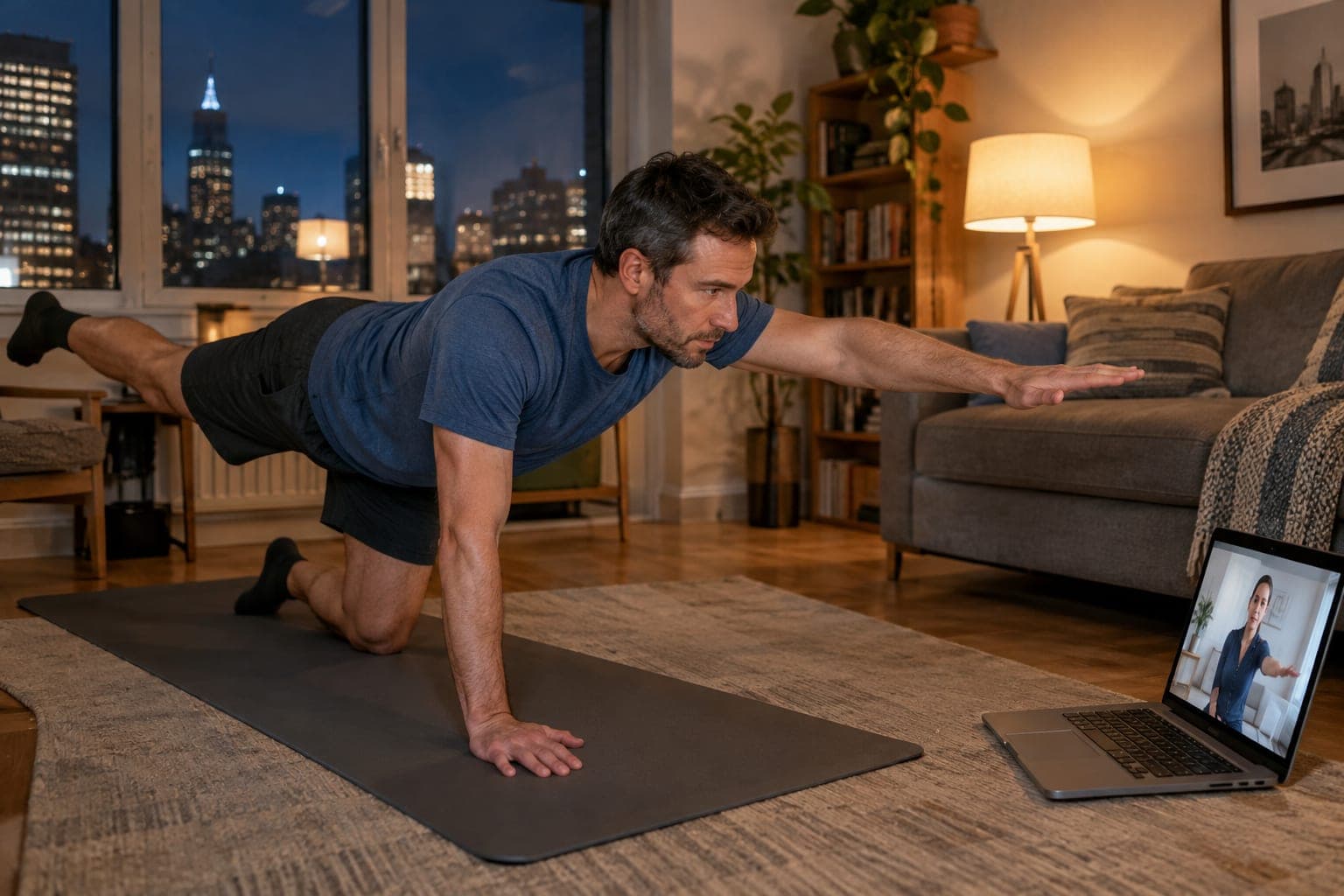
Bird-dog
On hands and knees, reach one arm and the opposite leg out, keeping your back still.
Daily walk
Walk at a comfortable pace and build up gradually.
Questions about lower back pain
Should I rest my back?+
Short rest in a bad flare is fine, but long bed rest usually slows recovery. Gentle, regular movement is generally better.
Do I need an MRI first?+
Usually not. Scans are only needed when red flags or specific nerve signs are present. Many people without pain have 'abnormal' scans.
How soon will I feel better?+
Many people notice a change in 2–4 weeks. Lasting improvement takes longer, which is why the programme runs 6–12 weeks.

Dr. Ashish Sharma (PT)
Global Physiotherapist & Performance Specialist · Medical review pending · General information, not a diagnosis.